







In February 2018 the Royal Canadian Mint sent my father a design brief for a coin marking seventy-five years since D-Day, and told him what to draw.

Listen to this story · 8 min
That is not how people imagine these commissions work, so it is worth being precise. The brief specified a soldier's boot print touching down on Juno Beach. It specified the water washing up the shore toward it, and that the profile of the water's edge should match the silhouette of the actual beachhead. It asked for the word CANADA at the top and the year 1944 in the design. It even specified the finishes: the print recessed into the coin, the sand textured, the water polished.
And then, in the section on originality, it said this plainly. Artistic liberties are not allowed. Every reference had to be documented and submitted. The artist had to provide a written walk-through of his own creative process before anyone at the Mint would look at the drawing.
So the image was not his idea. The question is what he did with an idea handed to him.
What arrived in the mail
The Mint's expert sent him the sole of a 3rd Canadian Infantry Division assault boot.
Not a photograph of one. The thing itself.
If you have read anything else on this site you already know what happened next, because it is what always happened next. He drew what was in front of him. The nail pattern, hobnail by hobnail. The metal plates at the heel and the toe. He went and established that nail patterns varied between units, so that the pattern on the coin would be the pattern that unit wore, not a generic approximation of a wartime boot.
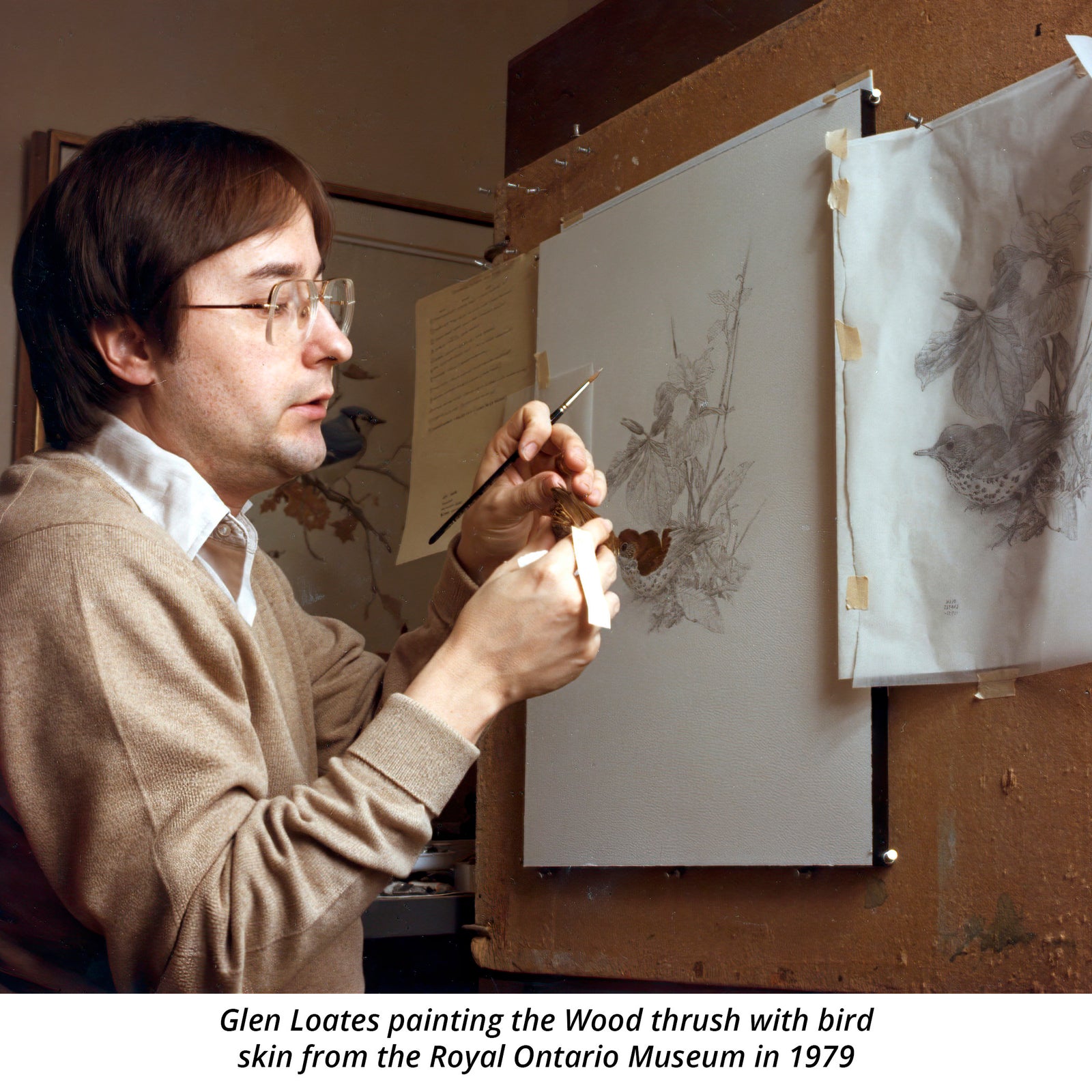
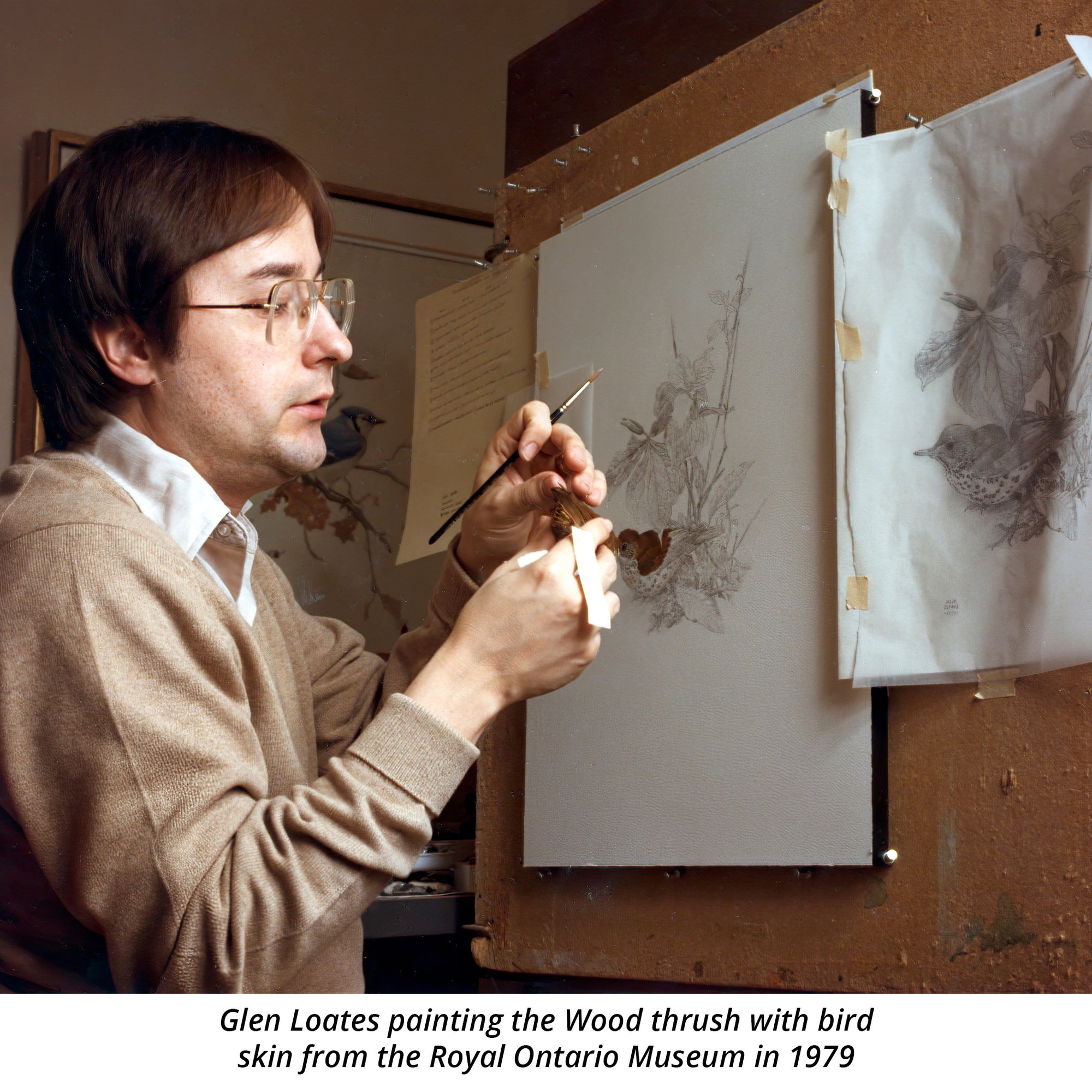
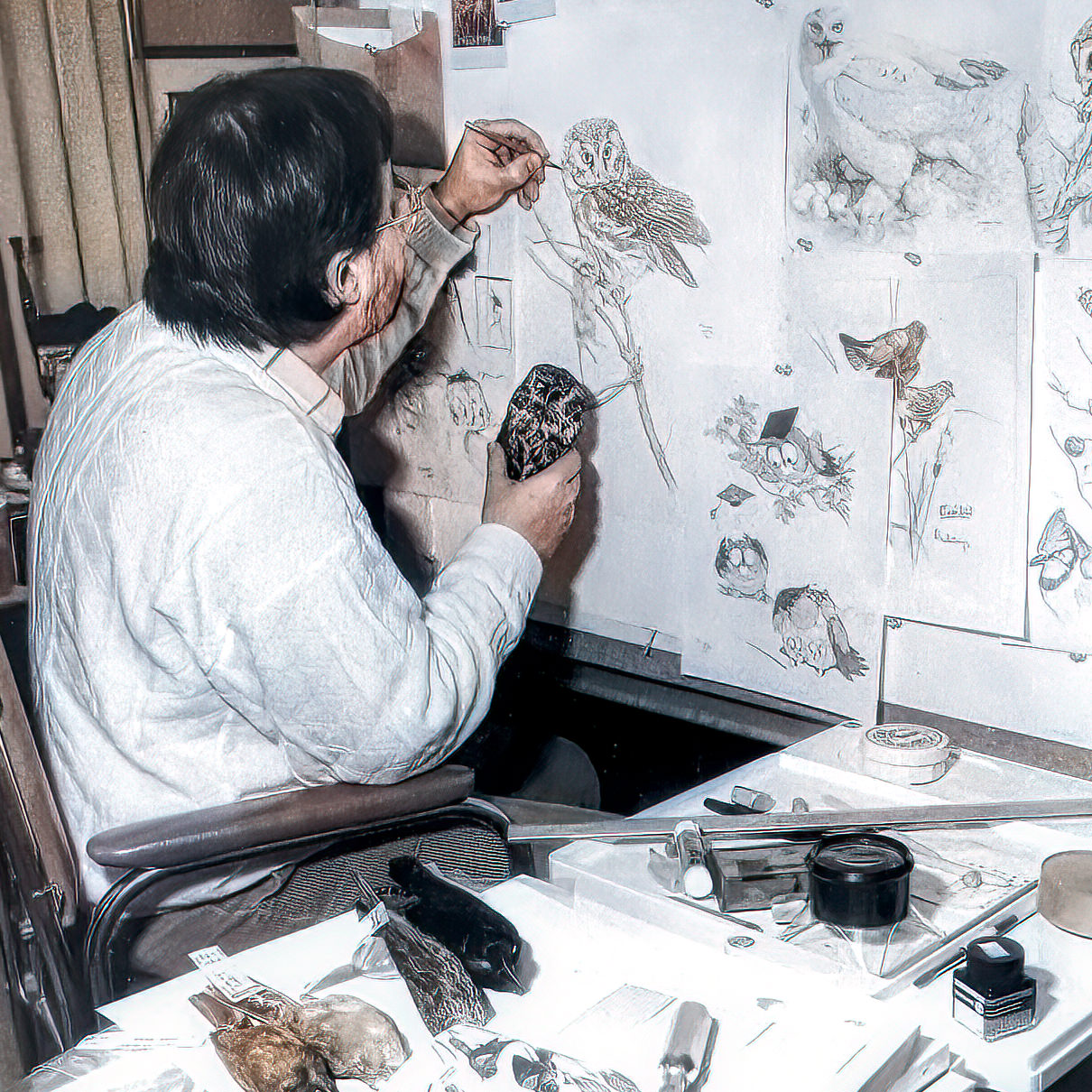
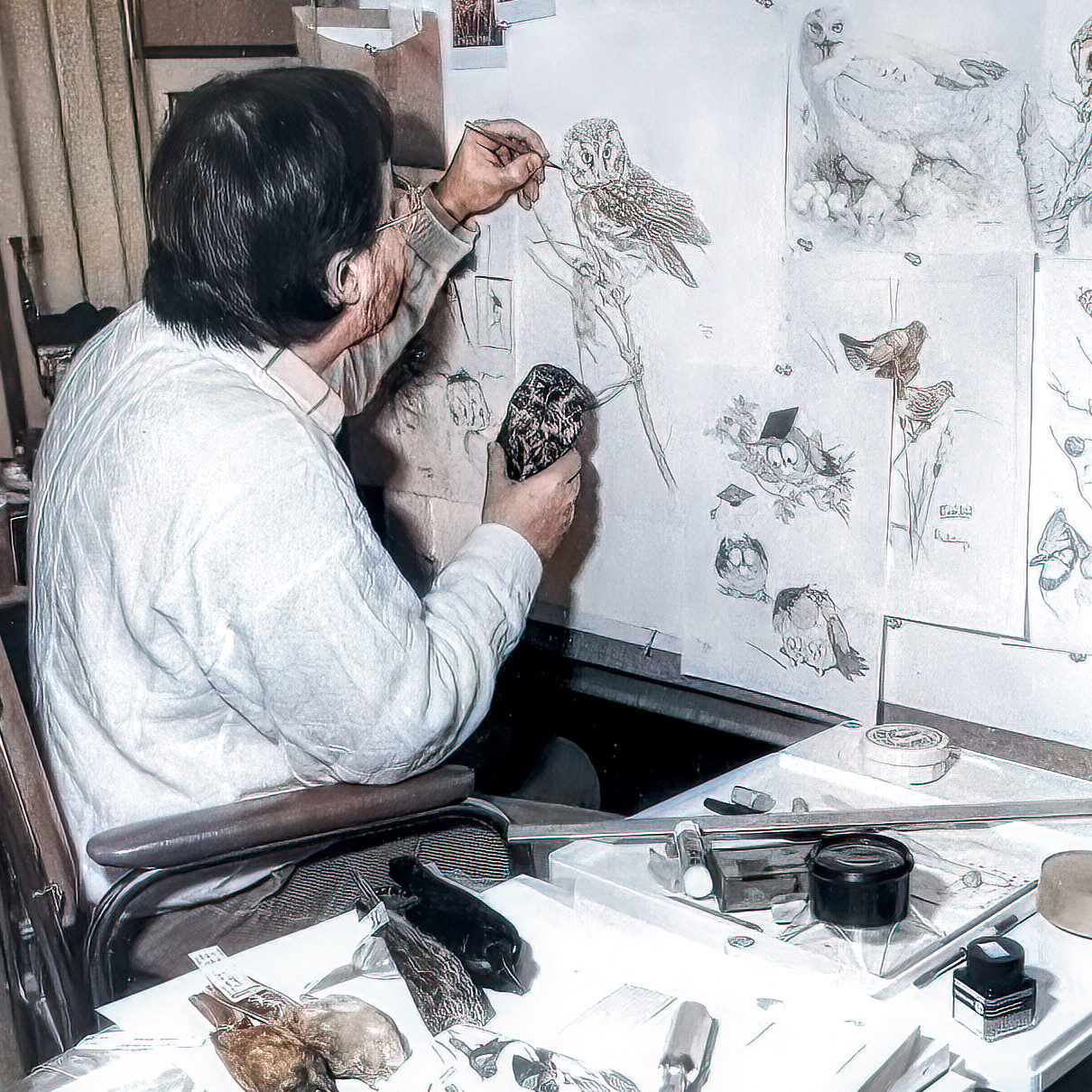
Ten years earlier he was holding a boreal owl three inches from his eye and counting the barbs on a flank feather. Here he is doing the same thing to a piece of leather and iron. Same distance, same refusal to guess.
Why the nails matter
In his notes he gives the reason in a single line. He detailed the nails and the plates, he writes, to show the boots were newly worn by the young infantry of the 3rd Division.
Read that again, because everything is in it.
Hobnails wear down. A boot that has been marched in has a flattened, polished, incomplete pattern. A boot straight from the quartermaster has every nail sharp and every plate square. What he drew is a new boot, and a new boot means the man wearing it had not been anywhere yet.
Fourteen thousand Canadians came ashore that morning out of a hundred and fifty thousand Allied troops. The Royal Canadian Navy contributed 110 ships and 10,000 sailors, and fifteen Royal Canadian Air Force squadrons supported the troops on the ground. On Juno Beach, where the 3rd Division landed, 359 were killed and 715 wounded before the day was out.
He commemorated them by rendering, accurately, the fact that their boots were still new.
The line at the bottom
Along the lower edge of the coin there is surf running up a sand beach. It is also a map.
That was the Mint's idea, not his. The brief asked for water washing up the shore with the profile of the water's edge matching the silhouette of the real beachhead. What he did with the instruction was go and get the coastline right, taking it from a wartime map of Normandy and tracing it. His own notes call it the aerial outline of Juno Beach. The Mint's material shows the two laid over one another, grid squares and all, the coin's water's edge running along the real shore.
Both readings hold at once, and neither cancels the other. It is water coming up a beach, with sand and foam. It is also the coastline of the landing seen from above. The boot print is one man at the size of a foot; the line beneath him is the whole beachhead. Your eye takes both without ever noticing the impossibility.
What was his was the timing. He submitted the design two ways, one with the water's edge plain, and one with foam, which his notes describe as the water hitting the beach at the moment the boot was imprinted.
The Mint chose the foam. That single decision is what turns the design from a diagram into a moment. The boot has just come down. The water is arriving now.
His initials are on it, lower right. GL.
The other thing he researched
Between the two dates on the coin there is a small maple leaf.
It looks decorative. It is not. It is the marking painted on the vehicles of the 3rd Canadian Infantry Division, the specific unit that landed at Juno. He found it, and he put it there, and unless someone tells you it is simply a maple leaf on a Canadian coin.
The two coins
The design was struck twice. A pure silver coin with a face value of three dollars, in a mintage of 100,000, issued at $24.95. And a 14-karat gold coin with a face value of one hundred dollars, in a mintage of just 1,200, issued at $699.95.
Both are now archived at the Mint. Neither can be bought new.
There is one detail about the packaging worth noticing. The silver coin was sold in a folder printed with a photograph of soldiers wading ashore under fire. The Mint wrapped a restrained, almost abstract image, one boot print and a line of coast, inside a literal picture of the thing itself. Put them side by side and you can see exactly what the coin is doing that the photograph cannot. The photograph shows you the landing. The coin makes you stand where one man stood, for one second, before any of it had happened to him.
Not the only one
Juno was not his only Remembrance commission, and it was not the one most Canadians have held.
He also designed the In Flanders Fields two dollar coin, marking a century since John McCrae wrote the poem that made the poppy a symbol of remembrance in this country. Five million of those were struck for general circulation.
Not a collector piece in a folder. Currency. Five million of them went into tills and pockets and coat linings across the country, and are still out there.
This was not his first
The Mint has come back to my father repeatedly, and calls him a master artist in its own materials.
The platinum snowy owl set in 1991. The pure platinum Cougar in 2014. The Scimitar Sabretooth Cat in 2018, and the Maple Leaf in Motion in 2019, the same year as Juno. And in 2012, for the loonie's twenty-fifth anniversary, the loon on the reverse of the specimen dollar is his, which means his drawing sits on the most recognisable coin in the country.
It sits alongside the Canada Post work, including the 1968 Gray Jay, among the first Canadian stamps printed by four-colour lithography.
Few Canadian artists have had their work carried in the pocket and on the letter of an entire country. In his case it is not a figure of speech.
What the constraint revealed
I used to think the interesting commissions were the free ones.
This one was almost entirely prescribed. Subject, composition, text, finish, deadline, and a written prohibition on artistic liberty. There was very little room in it.
What he put into the room he had was accuracy. He asked which boot. He got the coastline right rather than approximating it. He found the division's own marking and set it between the dates. And he noticed that a boot fresh from the quartermaster is the boot of a man who has not been anywhere yet.
None of that was in the brief. All of it is on the coin.
Michael Loates, Owner
Glen Loates R.C.A., Artist


Leave a comment (all fields required)