-
-
Login






Preview this work in a styled room, or on a photo of your own wall. Works on your phone, tablet or computer.
Complimentary shipping, carefully packed and delivered to your door.
Our promise to you: if a piece doesn't feel right in your home, let us know and we will make it right.
A raccoon forages along a stony shore — nose down, hands feeling through the pebbles and reed stubs at the water's edge. The bushy ringed tail is raised; the mask is pressed close to the stones. This is raccoon behaviour rendered with complete accuracy: the tactile foraging style, the way the animal uses its front paws like hands, the specific posture of an animal hunting by touch as much as sight.
Glen observed raccoons extensively at Ontario lakeshores and riverbanks, watching the foraging behaviour that makes them one of the most resourceful mammals in their environment. The stones and reed stubs around the animal are as specifically observed as the raccoon itself. His raccoon studies are among his most behaviorally precise mammal works.
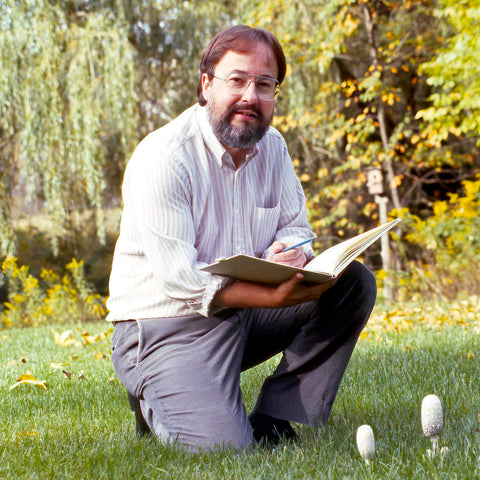
Listen to Glen's biography · 9 min
The full written biography is on the Biography page.
The format
Materials
View in Your Space
Imagine this work in your home before it arrives. Place it in a styled room, or on a photo of your own wall, and choose the size and frame that feel right.
Works on your phone, tablet or computer.


Shared by our collectors
Glen's work has hung in homes for decades. Here are a few pieces where they live now, photographed by the collectors themselves.

“…brings to mind fond childhood memories walking with my father.”
Linda F.

“We love the print very much. A few years ago, we had a beautiful fox arrive at our home.”
Betsy B.

“I have so many fond memories of growing up with the wildlife prints that truly inspired imagination and made our house a home.”
Michael G.
A family collection, begun in the late 1970s

“I choose prints from here because of the incredible detail and he is a Canadian artist.”
Barb R.

“It's hanging beside a lake that has Loons. Nice setting.”
Christopher W.

“This piece really brings out their personality and looks great at my cottage.”
Anne G.

“I love your father's work and will be back again for more.”
Anne G.

“Looks great in the room, and compliments the colours and theme I am going for.”
Lynda H.